
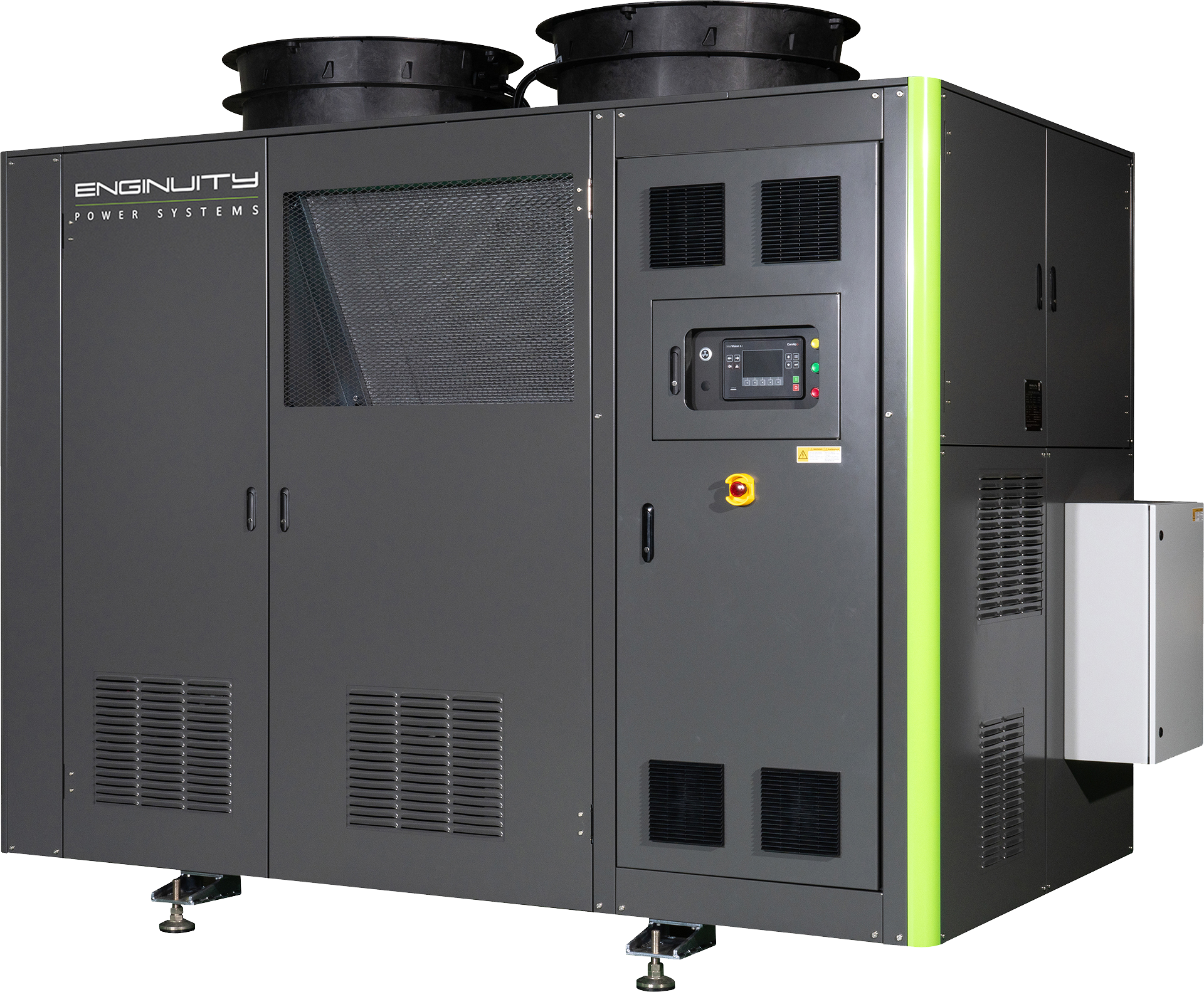
The Efficiency Principle: One Fuel, Two Outputs
Combined Heat and Power (CHP), also known as cogeneration, is an integrated energy system that produces electricity and usable thermal energy from a single fuel source. While traditional power systems vent heat as a byproduct, CHP captures that heat and repurposes it for facility operations.
By generating both outputs on-site, a facility can achieve total system efficiencies of up to 85%. This is a significant leap from the traditional grid model, which loses more than half of its input fuel to unused heat.
Get a quick, custom estimate.
What the 200kW System Delivers
The Definition:
CHP is an on-site system that generates electricity and captures heat simultaneously from a single fuel source, like natural gas.
The Value:
Instead of wasting the 50% of energy that traditional grid plants discard, CHP repurposes it for hot water and heating.
The Bottom Line:
CHP increases total fuel efficiency from roughly 35% to 85%, significantly lowering costs and strengthening energy resilience.
What the 200kW System Delivers
The Definition:
CHP is an on-site system that generates electricity and captures heat simultaneously from a single fuel source, like natural gas.
The Value:
Instead of wasting the 50% of energy that traditional grid plants discard, CHP repurposes it for hot water and heating.
The Bottom Line:
CHP increases total fuel efficiency from roughly 35% to 85%, significantly lowering costs and strengthening energy resilience.
How the Cogeneration Process Works
Unlike a standard standby generator that only activates during an outage, a CHP system is designed for continuous, daily operation.
The process follows a four-stage cycle of energy recovery.
Fuel Input:
Natural gas (or propane) fuels an industrial-grade internal combustion engine.
Electricity Generation:
The engine drives a generator to produce high-quality electricity for lighting, HVAC, equipment, systems, and machinery.
Heat Recovery:
High-temperature heat from the engine’s exhaust and cooling systems is captured via a heat exchanger rather than being vented into the atmosphere.
Thermal Distribution:
This captured energy is transferred to the facility’s water or air systems to provide domestic hot water, space heating, or process heat.
Closing the "Energy Gap"
The primary reason organizations adopt CHP is to resolve the massive discrepancy between fuel consumed and actual energy utilized in traditional power generation.

Grid Inefficiency:
Centralized power plants are often only 30–45% efficient because the heat created during generation is wasted, and further energy is lost during transmission across the grid.

Standby Inefficiency:
Standard emergency generators are typically 30–40% efficient and provide no value during normal daily operations.

The CHP Advantage:
By placing generation exactly where the heat is needed, CHP systems turn that “waste” into a financial asset, maximizing the value of every unit of fuel.
Strategic Evaluation:
Is Your Facility a Candidate for CHP?
CHP is a specialized energy strategy. It delivers the highest return on investment (ROI) for facilities that possess a specific operational profile.
Indicators of a Strong Fit
Predictable Thermal Demand
Your facility requires a steady supply of hot water, steam, or climate control throughout the year.
Continuous Operations
You have long daily operating hours or 24/7 uptime requirements.
Energy Price Volatility
You are exposed to rising or unpredictable electricity rates from the utility provider.
Resilience Requirements
Your operations cannot sustain interruptions, making reliable and continuous on-site energy a business necessity.
When CHP May
Not Be Ideal
- Low Thermal Needs: If your facility has minimal use for hot water or space heating, the secondary output of CHP remains untapped.
- Intermittent Use: Facilities with very low annual operating hours may not see the same rapid payback period.
- Extremely Low Utility Rates: If local grid electricity is inexpensive, the cost-offset of on-site generation may be less impactful.
When CHP May Not Be Ideal
Low Thermal Needs:
If your facility has minimal use for hot water or space heating, the secondary output of CHP remains untapped.
Intermittent Use:
Facilities with very low annual operating hours may not see the same rapid payback period.
Extremely Low Utility Rates:
If local grid electricity is inexpensive, the cost-offset of on-site generation may be less impactful.
Strategic Evaluation:
Is Your Facility a Candidate for CHP?
CHP is a specialized energy strategy. It delivers the highest return on investment (ROI) for facilities that possess a specific operational profile.
Indicators of
a Strong Fit
Predictable Thermal Demand:
Your facility requires a steady supply of hot water, steam, or climate control throughout the year.
Continuous Operations:
You have long daily operating hours or 24/7 uptime requirements.
Energy Price Volatility:
You are exposed to rising or unpredictable electricity rates from the utility provider.
Resilience Requirements:
Your operations cannot sustain interruptions, making reliable and continuous on-site energy a business necessity.
Strategic Evaluation: Is Your Facility a Candidate for CHP?
CHP is a specialized energy strategy. It delivers the highest return on investment (ROI) for facilities that possess a specific operational profile.
Indicators of a Strong Fit
- Predictable Thermal Demand: Your facility requires a steady supply of hot water, steam, or climate control throughout the year.
- Continuous Operations: You have long daily operating hours or 24/7 uptime requirements.
- Energy Price Volatility: You are exposed to rising or unpredictable electricity rates from the utility provider.
- Resilience Requirements: Your operations cannot sustain interruptions, making reliable and continuous on-site energy a business necessity.
When CHP May Not Be Ideal
- Low Thermal Needs: If your facility has minimal use for hot water or space heating, the secondary output of CHP remains untapped.
- Intermittent Use: Facilities with very low annual operating hours may not see the same rapid payback period.
- Extremely Low Utility Rates: If local grid electricity is inexpensive, the cost-offset of on-site generation may be less impactful.
Predictable Thermal Demand:
Your facility requires a steady supply of hot water, steam, or climate control throughout the year.
Continuous Operations:
You have long daily operating hours or 24/7 uptime requirements.
Energy Price Volatility:
You are exposed to rising or unpredictable electricity rates from the utility provider.
Resilience Requirements:
Your operations cannot sustain interruptions, making reliable and continuous on-site energy a business necessity.
When CHP May Not Be Ideal
Predictable Thermal Demand:
Your facility requires a steady supply of hot water, steam, or climate control throughout the year.
Continuous Operations:
You have long daily operating hours or 24/7 uptime requirements.
Energy Price Volatility:
You are exposed to rising or unpredictable electricity rates from the utility provider.
Resilience Requirements:
Your operations cannot sustain interruptions, making reliable and continuous on-site energy a business necessity.
Low Thermal Needs:
If your facility has minimal use for hot water or space heating, the secondary output of CHP remains untapped.
Intermittent Use:
Facilities with very low annual operating hours may not see the same rapid payback period.
Extremely Low Utility Rates:
If local grid electricity is inexpensive, the cost-offset of on-site generation may be less impactful.

Compare: Total Fuel Utilization
This table illustrates how CHP compares to other common energy sources based on total efficiency and primary application.
Technology | Usable Heat | Total Efficiency | Best Use Case |
|---|---|---|---|
Grid Power | No | ~30–45% | Standard utility supply |
Traditional Generator | No | ~35–40% | Emergency backup only |
Fuel Cell | Limited | 50-6-% | High-CAPEX specialized facilities |
Enginuity CHP | Yes | 70-80% | Continuous daily operations |
Compare yours with a free assessment.
Frequently Asked Questions
No. While traditional generators sit idle until an outage occurs, CHP is an “always-on” system designed for continuous daily operation to lower utility costs.
Enginuity CHP systems typically run on natural gas from existing utility lines, though propane can also be used, eliminating the storage and handling challenges associated with diesel.
The thermal energy is commonly used for domestic hot water, space heating, laundry operations, sterilization, and even absorption cooling.
Our industrial-grade systems are designed with a commercial-ready footprint and a noise profile that integrates into occupied, always-on environments.
Take Control of Your Energy Strategy
Understanding CHP technology is the first step toward energy independence.
Whether you are seeking to lower operating costs, reduce emissions, or stabilize your facility against grid volatility, Enginuity provides the platforms that make it possible.
Ready to see the systems?
Explore our high-efficiency CHP platforms to compare electrical outputs, thermal recovery rates, and operational advantages.